Wednesday: a 14-year-old rewrites the record books at Owosso. Friday: I close out a full season as a track photographer under the lights at Lake Odessa. Saturday: a champion gets crowned out in the Thumb after winning twice in two nights, and I’m the one standing in victory lane both times. Three tracks, three different jobs, five days, and by Sunday morning I genuinely couldn’t tell you what day it was. This is what a race week looks like from behind the lens.
Wednesday, August 26 — The Michigan 300, Owosso Speedway
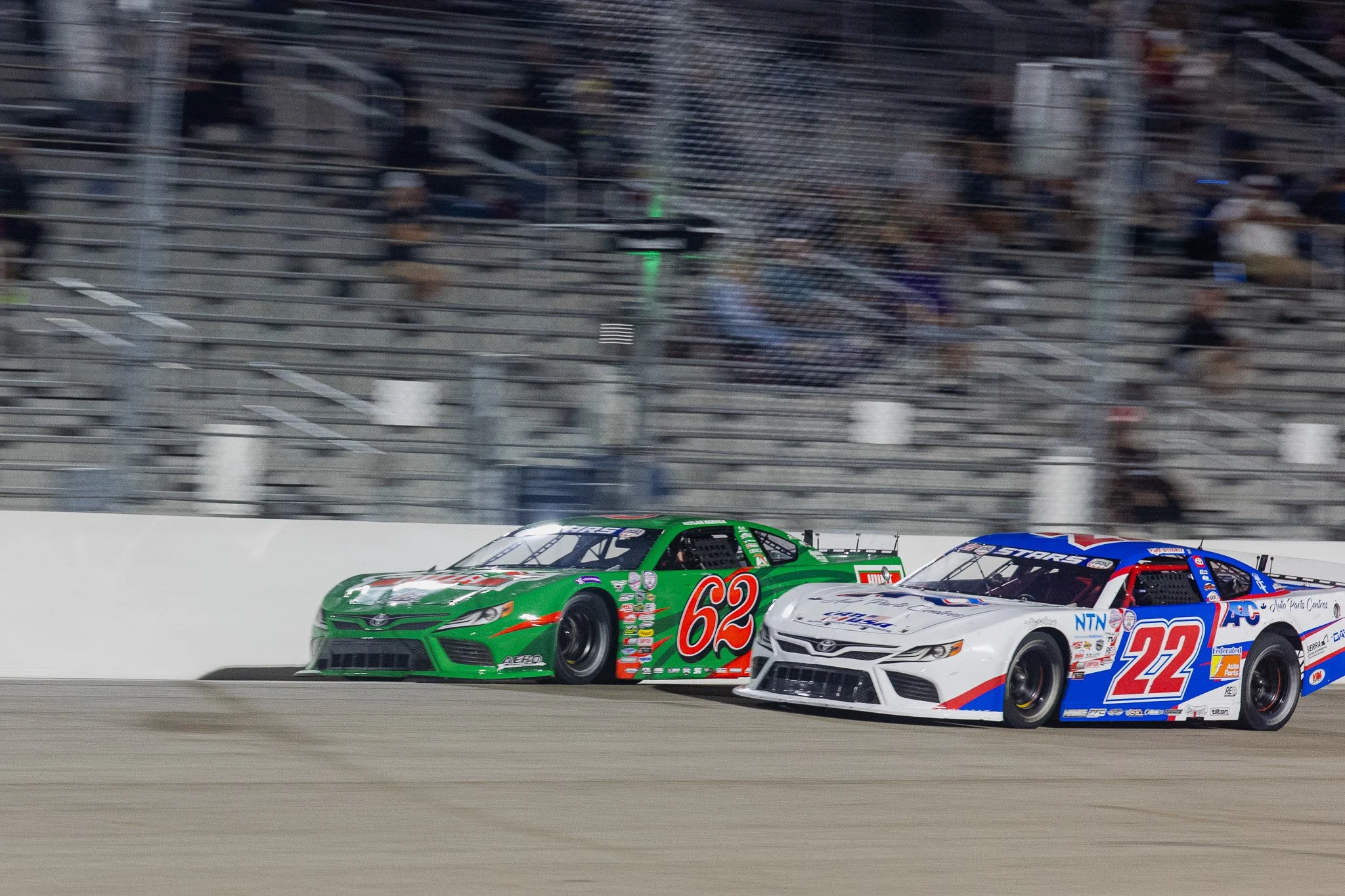
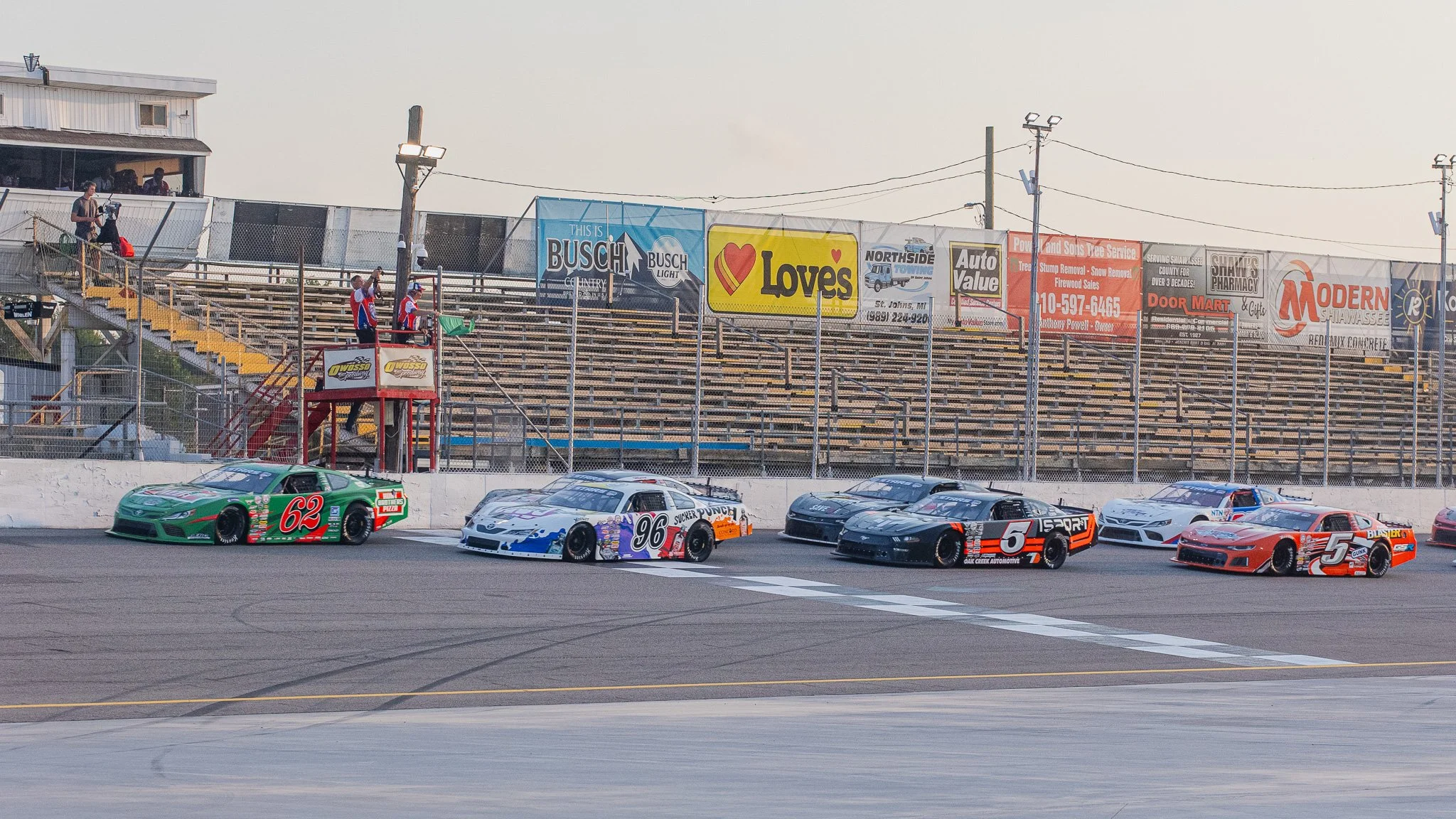
Midweek races shouldn’t work. It takes real dedication to leave work early on a Wednesday for a car race. And yet the “Big O”, Owosso Speedway’s 3/8-mile progressive-banked bullring, was packed for the Michigan 300, an ASA STARS National Tour stop I was covering for MARC News, and every seat felt earned.
I came into this one already knowing the storyline could be big. What nobody fully clocked until it happened was just how big. Keelan Harvick, the 14-year-old son of a Cup Series champion, and fresh off only his second ASA STARS start, took a rain-delayed pole, weathered a full-blown night of chaos behind him, and drove off with the win. He and Kyle Steckly traded the top spot with a pair of switchback slide jobs that had the whole grandstand on its feet, and when the checkers finally fell, Harvick had become the youngest winner in ASA STARS National Tour history. Not the youngest winner at Owosso. The youngest ever, full stop, breaking a record that had stood since 2023. A great local story was buried in there too: Clarkston’s own Michael Simko wasn’t even sure his car would fire after engine trouble the day before, yet he dragged it inside the top five before late trouble dropped him to sixth. That’s short track racing in a nutshell: heartbreak and history sharing the same 300 laps.
I got to sit down with Harvick post-race, which is my biggest interview to date, and not going to lie, post-race interviews have historically been my soft spot. Sticking a recorder in front of someone still buzzing on adrenaline, two minutes after the biggest win of their career, and getting something usable out of it is its own skill, completely separate from knowing which f-stop to run. This one felt different. Better. A whole season of reps finally showing up when it mattered. He was gracious, thanked his Rackley WAR crew, and it was easy to see why people are already talking about this kid.
Photography wasn’t even the assignment that night. I was there on interview and coverage duty for MARC News, but you don’t put a camera in my hands at a national touring show and expect me to leave it in the bag. Between the racing and the whole evening’s festivities, I walked away with a set I’m genuinely proud of, and got to trade tall tales and war stories from the season with some great photographer and media friends I only ever seem to see at shows like this one.
Full Michigan 300 gallery: biographyphotography.pixieset.com/2026michigan300atowossospeedway
Friday, August 28 — Season Finale, I-96 Speedway
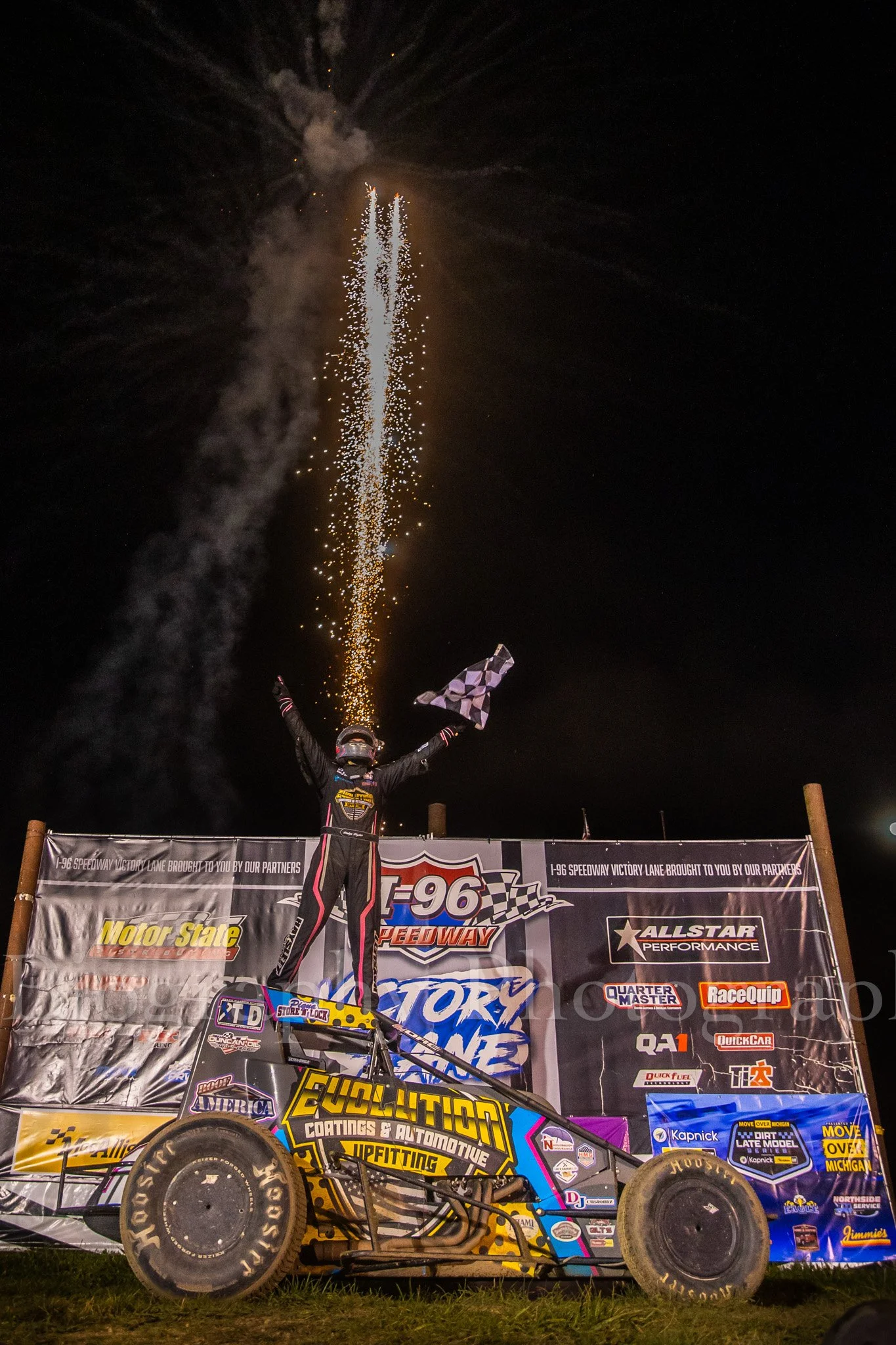
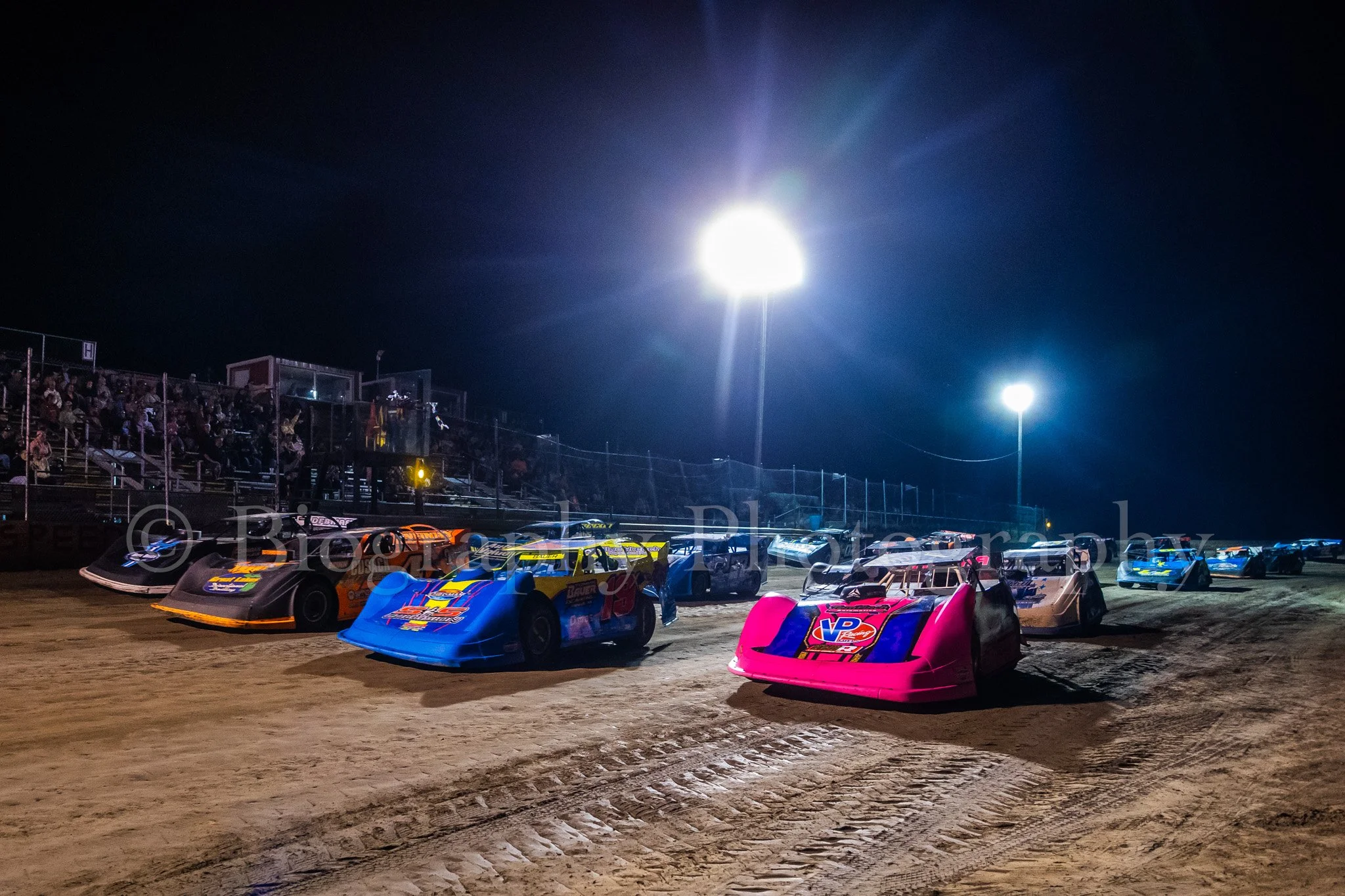
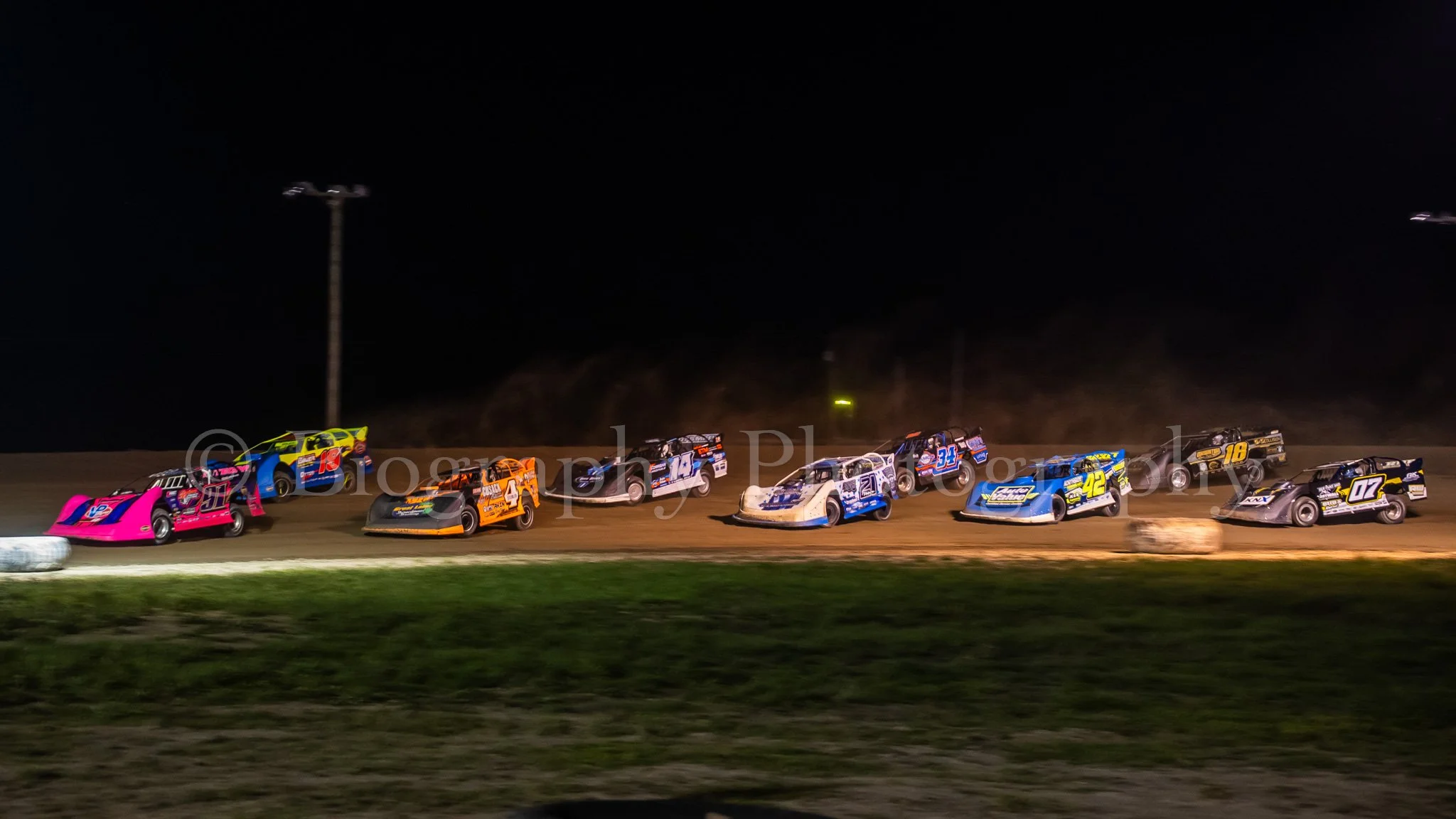
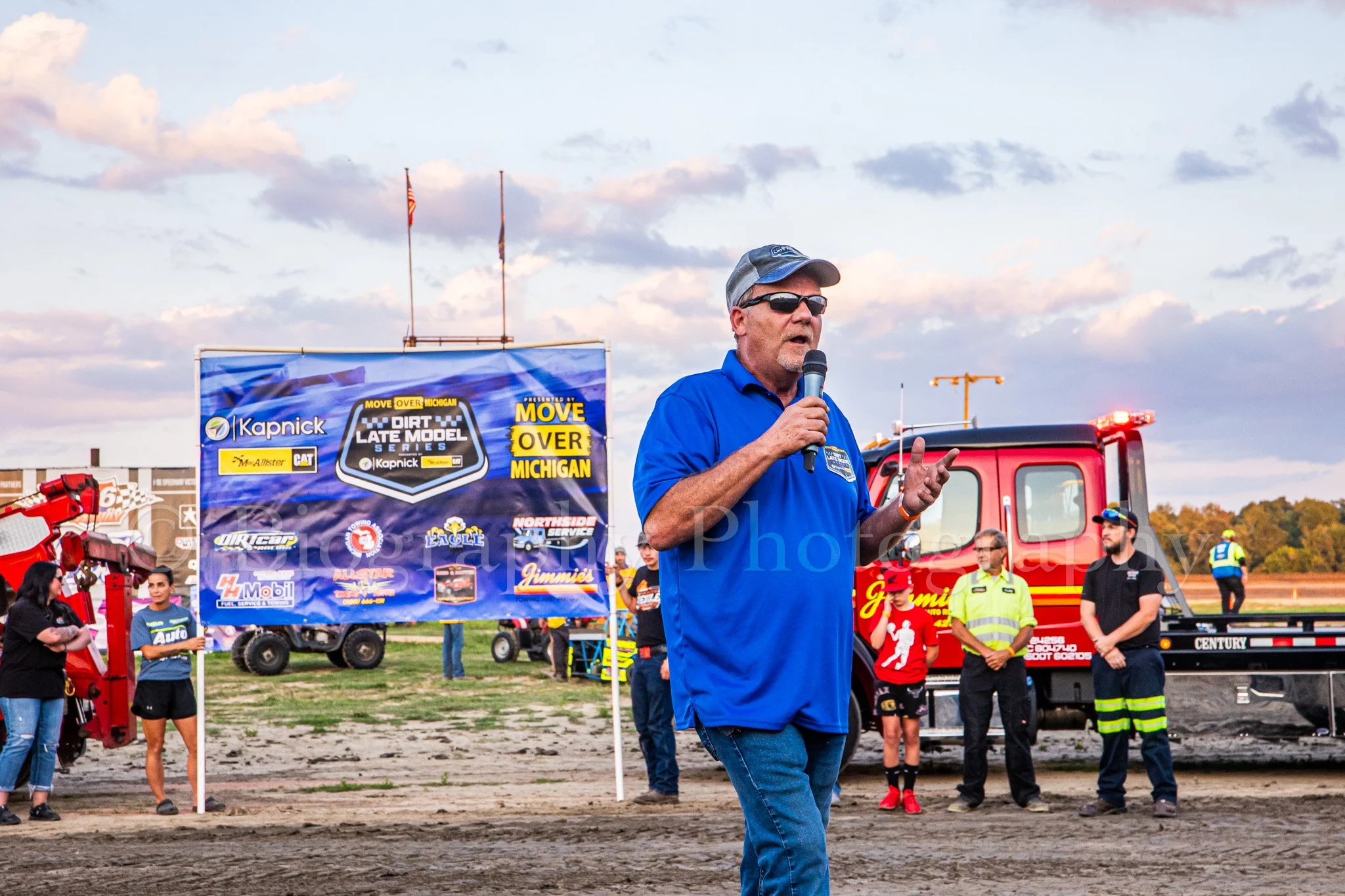
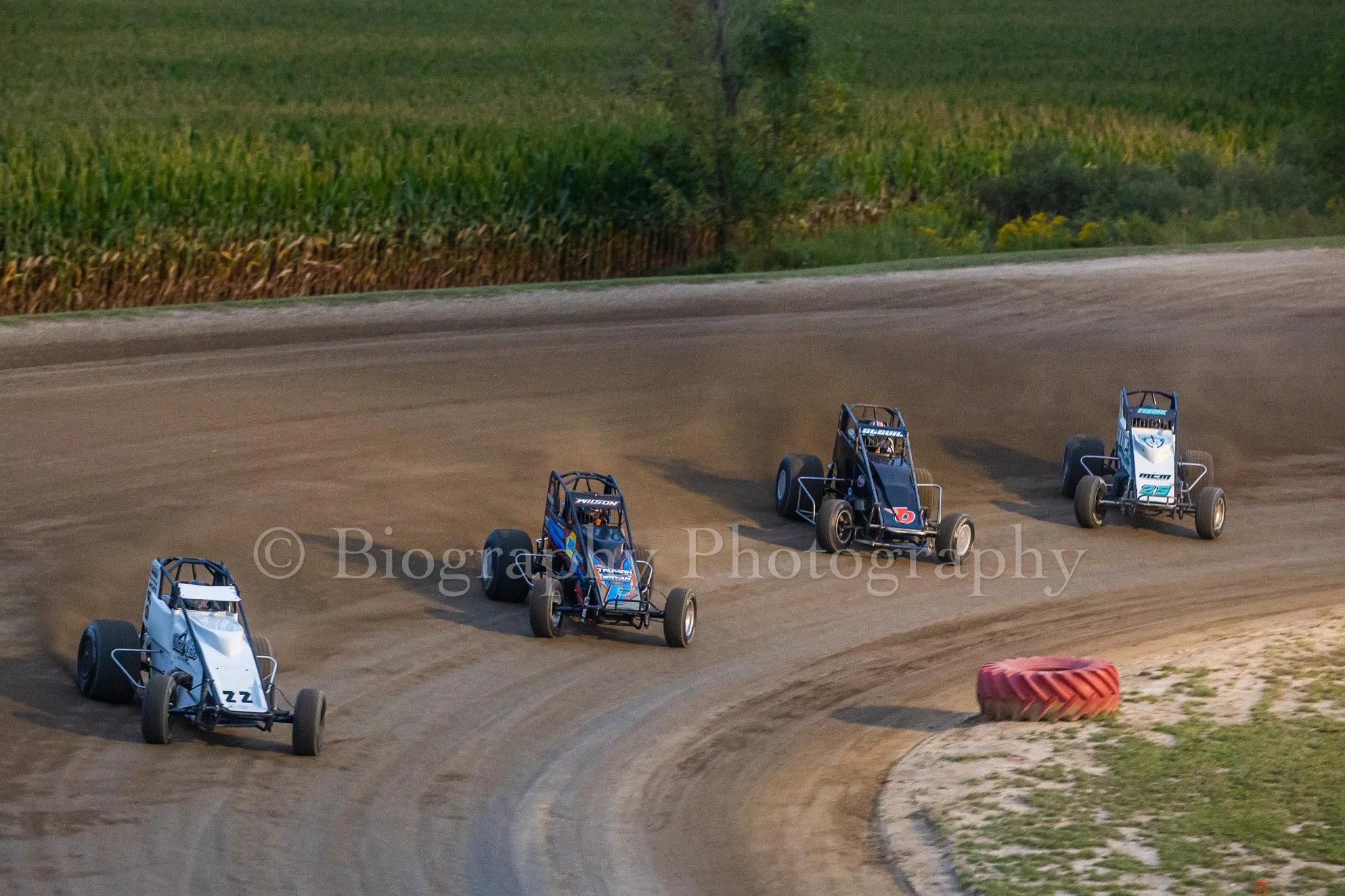
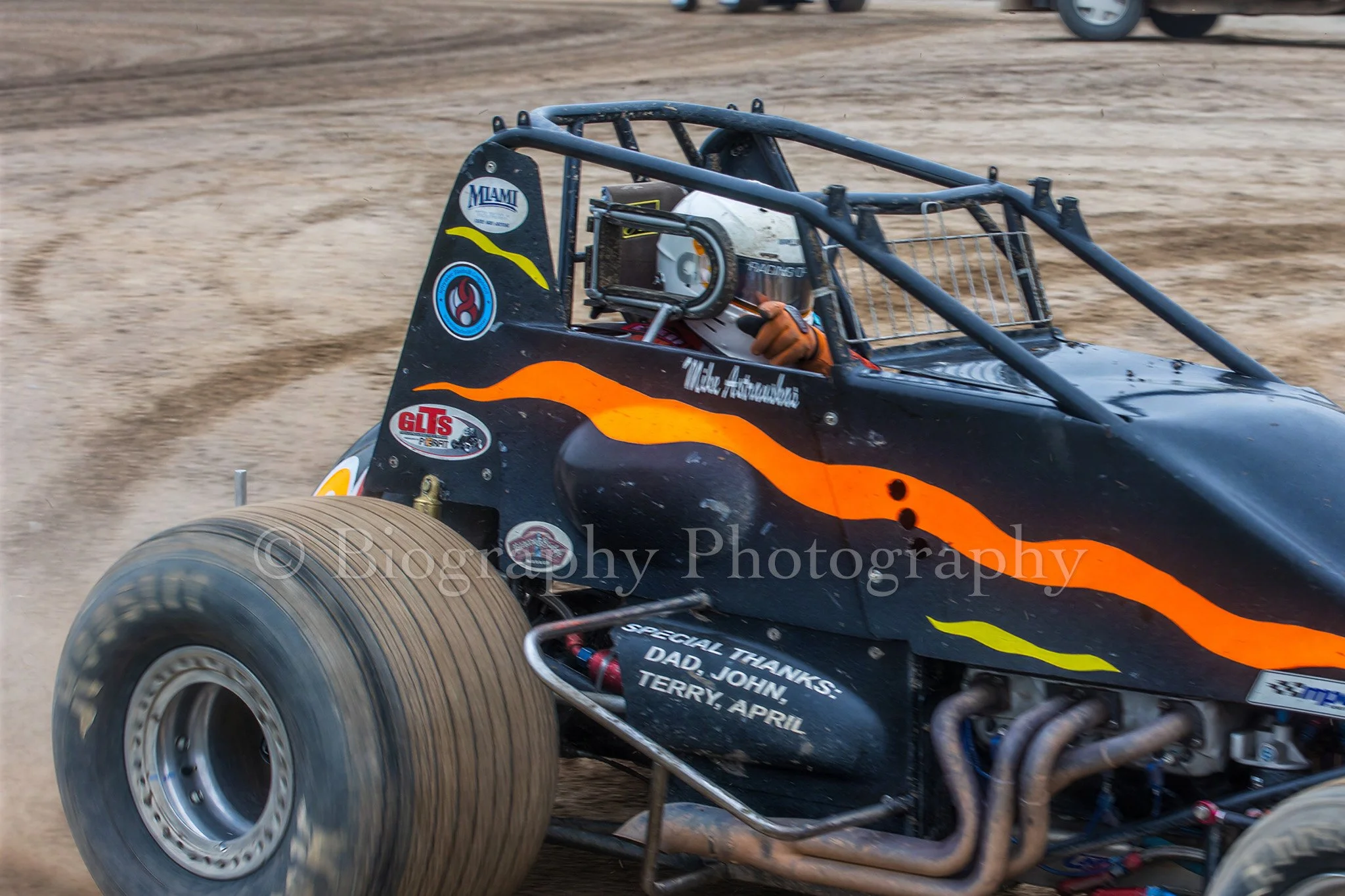
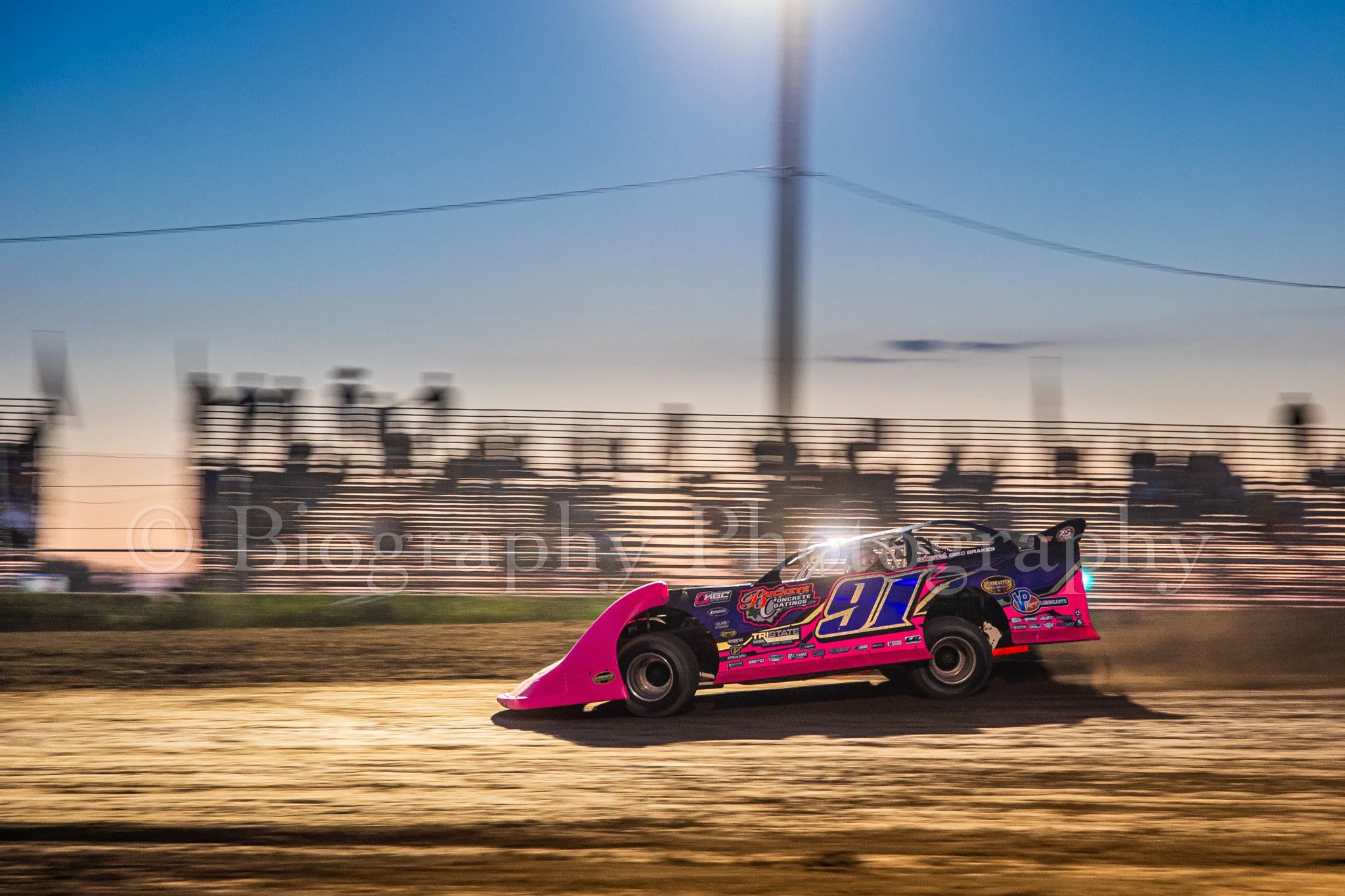
Two nights later, I was back in the pit gate line, except this time in Lake Odessa, and this time there was a new feeling in the air. Friday was my last night of the season as track photographer at I-96 Speedway, and the card was stacked to send it out right: the Move Over Michigan Dirt Late Model Series and the Great Lakes Traditional Sprints, sharing the same dirt on the same night, champions on the line in both.
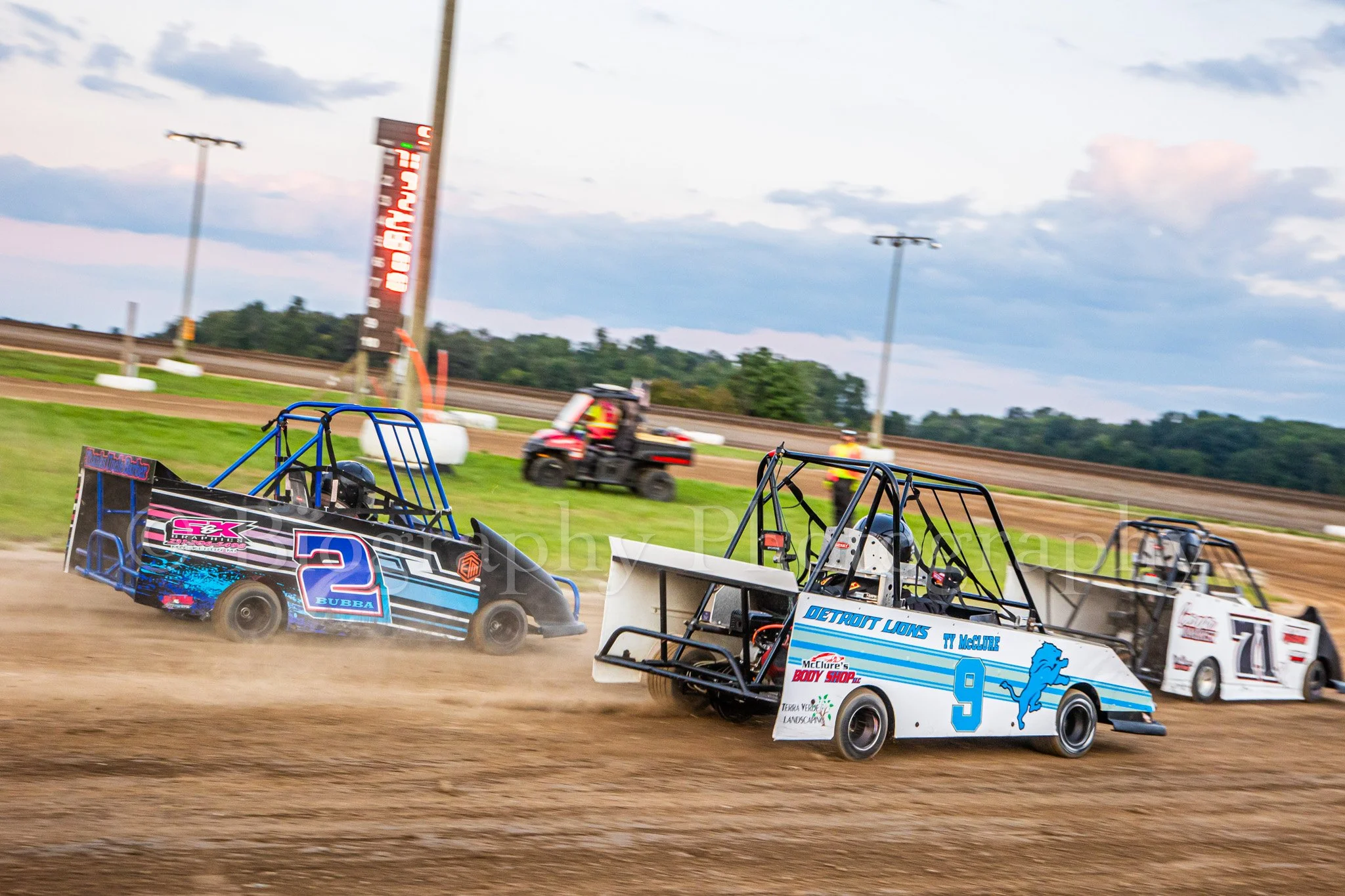
Track photography is a different animal than working a single series or the news. You’re everywhere. You’re the house shooter, the guy the announcer name-checks. The one who has to know every division’s plan for the night, the who’s who, the storylines, and every driver’s number before hot laps even start. It’s a grind, and it’s the best kind of grind. We crowned our track’s class champions that night with genuinely great racing to close it out, and between a full, varied lineup of cars on the card and a stretch of perfect weather, it turned into one of those nights where you forget your feet hurt until you’re loading the car at midnight-thirty.
What actually got me, though, wasn’t the racing. It was realizing, camera still around my neck, that I’d spent an entire season building real friendships at that track. Not “good working relationship” friendships, actual ones. I already know I’m coming back for track photographer duties next season, and honestly, I can’t wait.
Full I-96 Speedway gallery (August 28): biographyphotography.pixieset.com/i96speedway2026/august282026
Saturday, August 29 — Great Lakes Traditional Sprints, Silver Bullet Speedway
Saturday I backed up Friday’s images, dusted off my camera, and loaded up to head towards the Thumb, out to Silver Bullet Speedway, a track I hadn’t set foot on since May. Different assignment, different rhythm entirely. Working exclusively for a series instead of a track means you’re not hauling your gear between six divisions and a hundred different storylines. You’re locked in on one paddock, and it opens up a completely different kind of night.
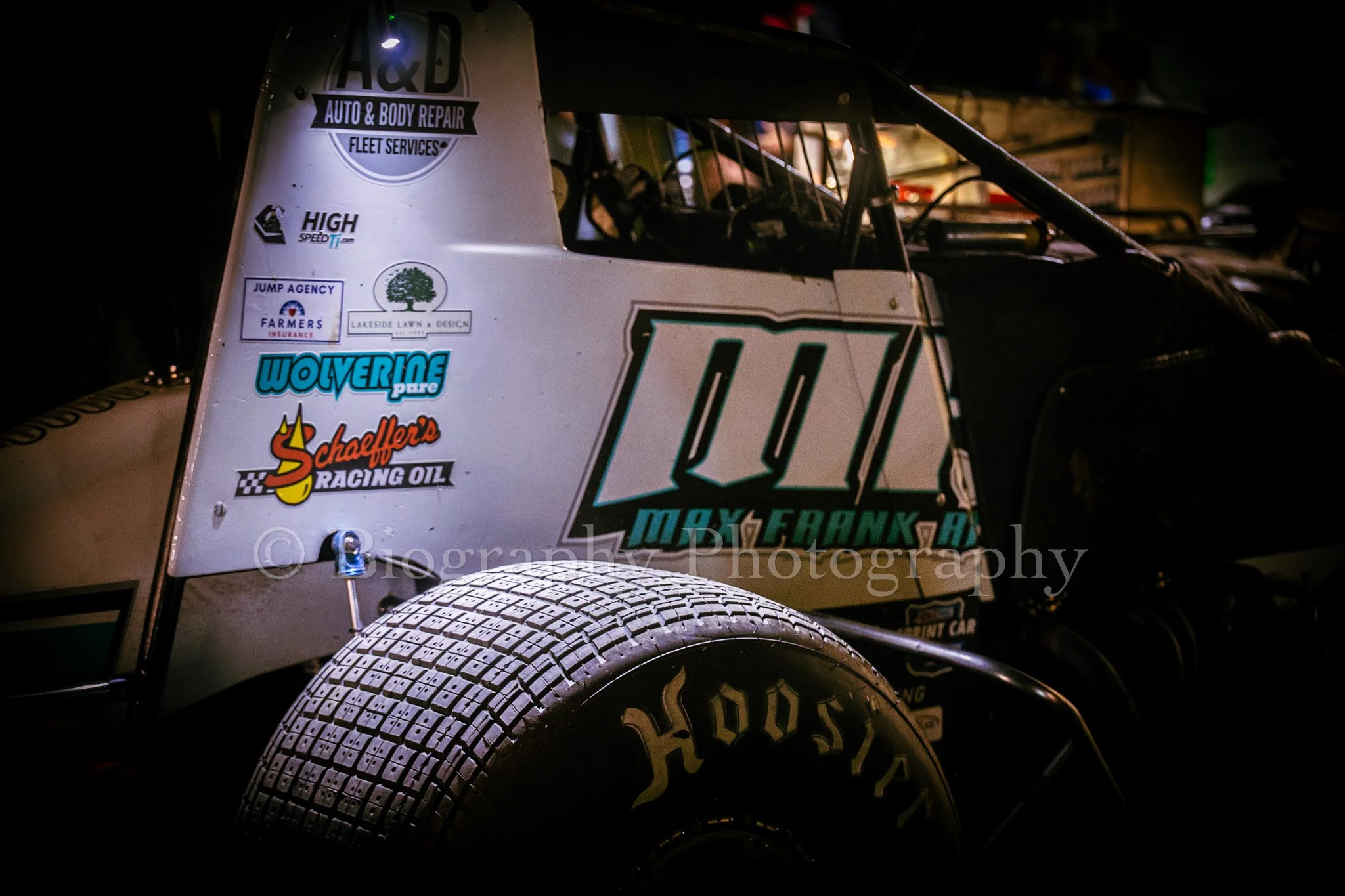
I spent more time actually hanging out with drivers than I had all season, and less time hocking photos. At one point, I got a genuinely fascinating, unplanned fifteen-minute education in sprint car tire rubber: cutting and tuning your own tire compound, how tires get selected and routed to different series, and the science behind air pressure, stagger adjustments, and bleed-off. It’s the kind of behind-the-curtain stuff that makes you fall back in love with a sport you thought you already understood cold. The tradeoff, of course, is that fifteen minutes of tire school is fifteen minutes I didn’t spend warming up my eyes and my instincts before the green flag dropped. You feel that the second the first car hits turn one.
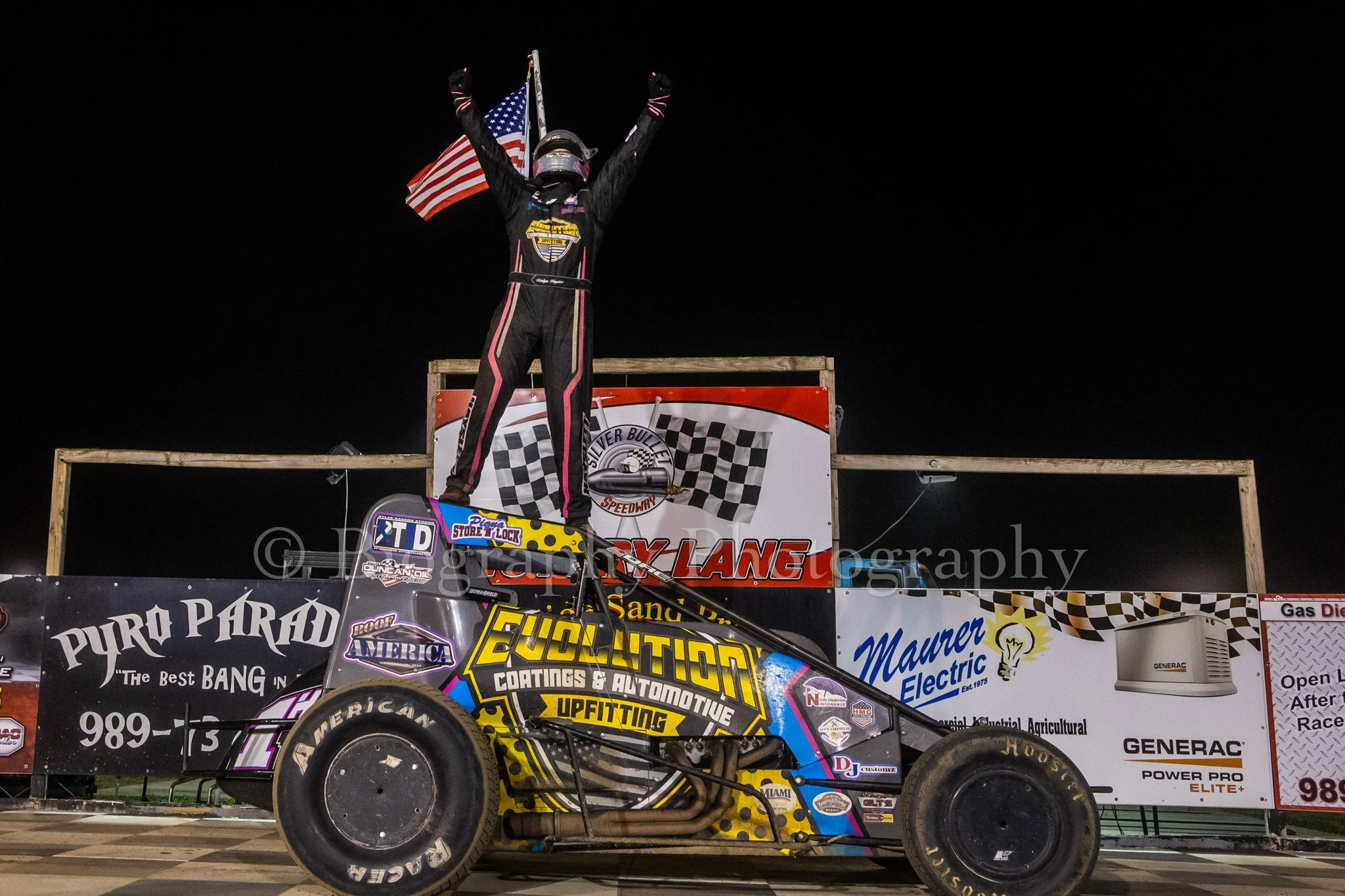
The night carried extra weight, too. The Great Lakes Traditional Sprints crowned their series champion this weekend, and their guy did it in style by winning both nights, Friday at I-96 and Saturday at Silver Bullet, a true back-to-back sweep to close the deal. I had a camera on him in victory lane both nights, and then again for the championship photos once the dust settled. Standing there Saturday night, watching a champion get crowned through my own viewfinder, it hit me all at once: this was it. The season. Done. A full year of being a track photographer, in the books, closed out in the same weekend I sat around trading stories with some of the top late model pavement drivers in the country and media people who’ve been doing this a lot longer than I have.
Full Silver Bullet Speedway / GLTS gallery: biographyphotography.pixieset.com/greatlakessupersprints/glts82926silverbulletspeedway
The Part Where I Catch My Breath
Three tracks. Three completely different jobs: reporter, house shooter, series photographer, worn like three different jackets in the space of five days. A record-breaking teenager in victory lane on a Wednesday. My own track family crowning champions and sending me off for the winter on a Friday. A series champion sweeping a weekend I happened to be standing in both victory lanes for on a Saturday.
People ask what a motorsport photographer actually does, like it’s just showing up and pointing a long lens at a car in a corner. It’s not. It’s learning to read a car’s setup before it ever hits the track. It’s building enough trust with a 14-year-old phenom’s crew, or a series champion mid-celebration, that they let you in close. It’s tire chemistry lessons you didn’t ask for and won’t forget. It’s dirt in your teeth and asphalt dust on your lenses and a season’s worth of friendships you didn’t see coming when you first picked up the camera.
And the wildest part? The season’s not even over yet.
Coverage from the Michigan 300 produced for MARC News (Michigan Area Racing Connection).