How The Image Happened: American Flag Panning at the Winchester 400
Cars come around fast. Really fast. And when you’re shooting a 400-lap race, you’re not sitting there hoping for one moment; you’re building a series of them. Testing. Adjusting. Trying things you normally wouldn’t risk.
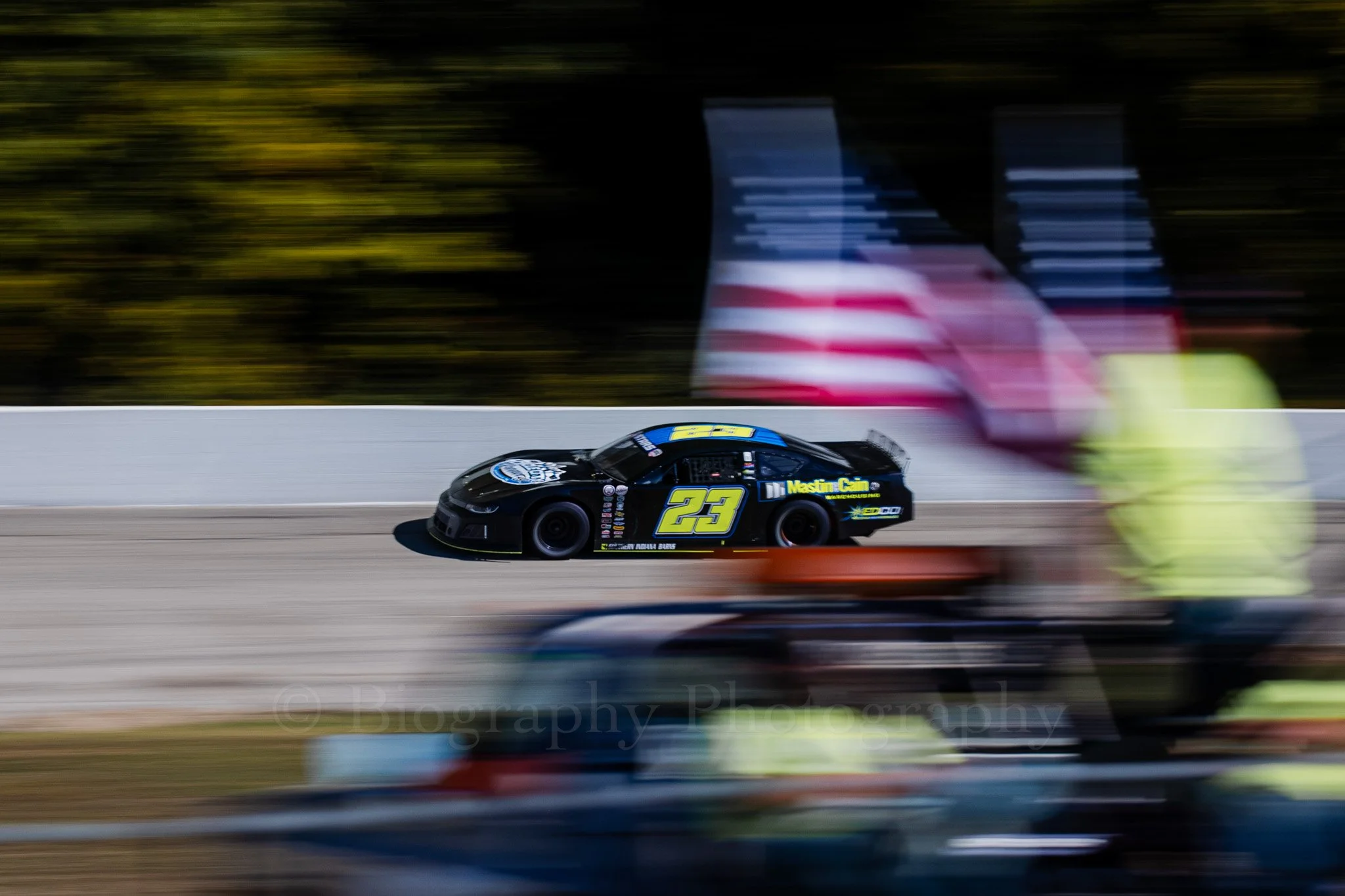
That’s exactly how one of my favorite images from 2025, which you can see at the end, happened.
Why This Race Was Different
The 2025 Winchester 400 gave me everything I could ask for as a photographer:
A legendary motorsport event
400 laps (obviously… but that matters)
Access to the infield (with credentials)
Grandstands
Outer track areas
Pits (working with my client)
And just as important, I wasn’t walking in blind.
This was my third straight day shooting at Winchester Speedway.
By this point, I wasn’t guessing anymore:
I knew how the light moved across the track.
I knew where my driver would be consistent.
I had already worked through the “safe” shots.
That’s when things get fun.
Finding the Shot
I ended up on the backstretch, just past Turn 2—probably about 100–150 yards out.
This was a great spot thanks to a few things that I intentionally stacked in my favor to make it a classic, layer, Biography Photography shot:
A racecar at speed, moving in a straight line
Safety crew staged on a tow truck
An American flag mounted and blowing with the direction of the cars
That was the moment.
Everything lined up:
Clean composition
Predictable car placement
The sun was lighting the car exactly how I needed it
And a foreground element that actually added something
That flag wasn’t just “there.” It was moving with the shot.
The Execution: Controlled Experiment
This is where having intentions in your short track racing photography shines.
Instead of hoping to nail it once, I could work it.
I planted in one spot and started dialing in:
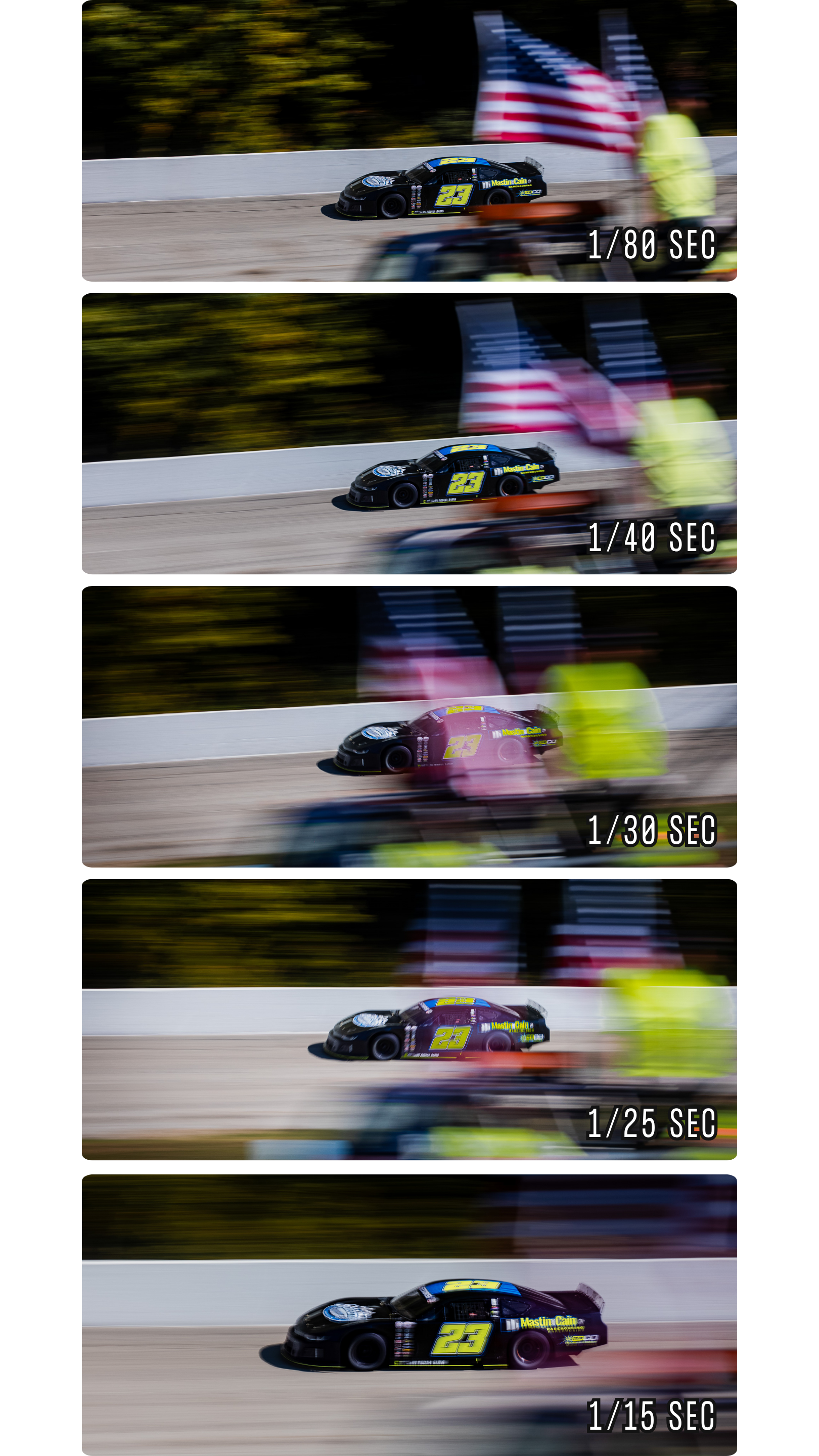
Gradually lowering shutter speeds
Tracking the same line every lap
Adjusting timing and movement
And yeah… I hit a few early. (We’ll call that a humble brag.)
What Came Out of It
What I ended up with wasn’t just one good image.
It was a full set showing:
Different shutter speeds
Different levels of motion blur
Different feelings of a similar same moment
But the best ones? That depends on your own style, which is great.
Perfectly sharp car
Surrounded by motion
Track streaking
Trees blending
Crew blurring
And that American flag framing the car in one of America’s classic races
The Bigger Point
That entire sequence, from finding the spot to getting the shot, took maybe 12–15 laps out of 400. That’s all it needed.
That’s the difference between:
Just covering a race
andActually creating something from it.
When you understand the track, the light, and your subject… you stop reacting and start building shots on purpose.
Here's my favorite shot from the bunch, which one is yours?
If you’re a driver, team, or sponsor—this is exactly what you’re getting when you work with me.
Not just photos.
But the intention behind every frame.
And knowing when to take 15 laps… and turn it into something you’ll use all season.
Contact me HERE